Before You Sign: A Due Diligence Playbook for American Buyers Sourcing in Hongseong
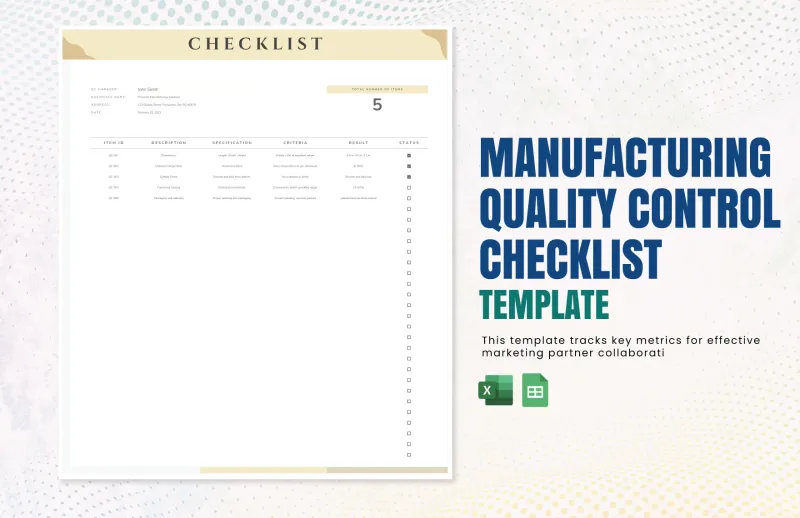
Photo: factory inspection checklist manufacturing quality control Korea, via images.template.net
Every year, thousands of American entrepreneurs take their first step into overseas manufacturing. Some thrive. Others lose deposits to unvetted suppliers, receive goods that fail specification, or discover mid-production that their "partner" was a broker with no factory at all. The difference between outcomes is rarely luck — it is process.
MPC consulting in Hongseong exists to impose that process. Here is how the framework works, and how you can apply it even before your first factory visit.
Step One: Verify the Entity, Not the Website
A polished English-language catalog tells you nothing about a manufacturer's legitimacy. Begin with corporate registry verification — confirming the legal entity, its founding date, and its registered business scope. A company founded three years ago claiming two decades of aerospace-grade production experience warrants scrutiny.
MPC advisors routinely cross-check registry data, export histories, and trade references before a US client ever schedules a call. This is unglamorous work, and that is precisely why it prevents expensive mistakes.
Step Two: Audit the Factory Floor
When you do visit — and you should, in person or through a local representative — arrive with a checklist rather than a tour guide's itinerary. Key checkpoints include:
- Who operates the equipment? Ask whether workers are directly employed or subcontracted. Heavy reliance on outsourced labor signals a trading company wearing a manufacturer's clothing.
- Where is quality control performed? A dedicated QC station with documented inspection records is a positive sign. A single inspector "handling everything" is not.
- What does the sample room look like? Compare the samples shown to you against production-line output. Discrepancies between showroom quality and actual production are among the most common sourcing failures.
- Is the floor at capacity? An empty factory raises questions about order flow; a facility running three shifts may struggle to prioritize your order.
Step Three: Interrogate the Certifications
Certifications — ISO 9001, CE markings, UL listings — matter, but only when they are current, correctly scoped, and genuinely held. Red flags include certificates issued to a different corporate entity, expired documents presented without explanation, or claims of certifications for product categories the standard does not cover. Request the actual certificate numbers and verify them with the issuing body. A legitimate manufacturer will provide them without hesitation; hesitation itself is data.
Step Four: Use Local Expertise as Leverage
This is where regional consulting support changes the game for first-time importers. A Hongseong-based MPC advisor brings three assets an American entrepreneur cannot replicate from afar: established relationships with local manufacturers, fluency in the business customs that govern Korean negotiation, and physical presence for unannounced visits and in-production inspections.
Local consulting support also functions as a screening filter. Manufacturers who have worked with MPC-backed clients have already been introduced to American expectations around communication cadence, documentation, and quality tolerance — shortening the onboarding curve considerably.
Step Five: Structure the First Order to Reduce Exposure
Even with thorough vetting, keep your initial order small. Negotiate staged payments tied to production milestones, insist on pre-shipment inspection rights, and define acceptance criteria in writing before production begins. A supplier who resists these standard protections after passing every other check deserves a second look.
The Bottom Line
Sourcing overseas will never be risk-free, but it can be managed. American entrepreneurs who combine their own diligence with on-the-ground Hongseong support consistently report faster supplier onboarding, fewer quality disputes, and — most importantly — the confidence to scale their first successful order into a lasting partnership. The playbook is not complicated. It simply has to be followed.