Sunday Afternoons, Second Shifts: The Family Arithmetic Behind Hongseong's Small-Batch Production
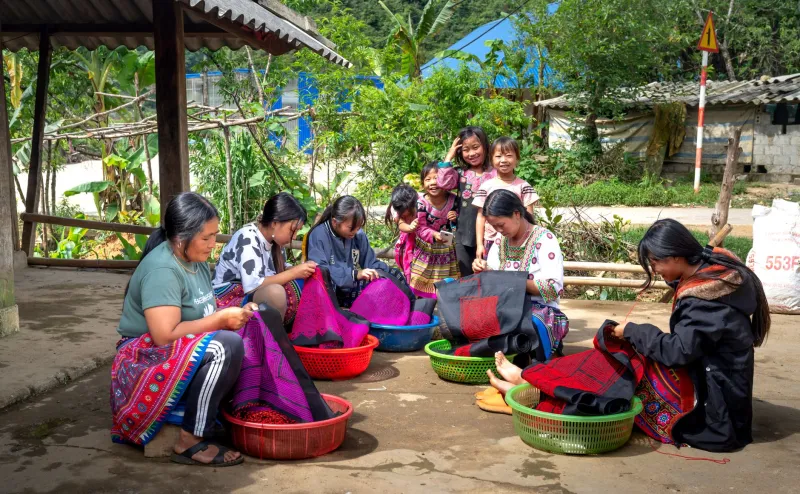
Walk past a low-slung workshop on the edge of Hongseong on a Sunday afternoon and you might mistake it for a family gathering. A grandmother at a finishing table. A father cutting fabric between trips to check on the garlic field behind the building. A college student home for the weekend, labeling cartons while her younger brother does homework in the corner. In a very real sense, that is exactly what you are looking at — and for American importers, understanding this arrangement is the difference between a reliable small-batch partner and a missed production window.
A Workforce That Shares a Surname
Most of Hongseong's tiniest operations — the five-person shops that handle pilot runs and low-volume orders for US brands — are not staffed in the way an American factory is staffed. They are households that produce. Labor is divided not by shift schedule but by life schedule: the mother who handles quality control also handles the school run at 3 p.m.; the father who runs the cutting machine steps away during rice-planting week; the grandmother whose stitching is often the most precise in the building works the hours her energy allows.
This is not inefficiency. It is a different operating system, one with trade-offs that cut in both directions.
Why Family Structure Can Mean Faster Turnaround
Here is what surprises first-time American buyers: these households are often more responsive to rush orders than larger factories, not less. A corporate factory needs a production slot, a manager's approval, and overtime authorization. A family workshop needs a decision at the dinner table.
When a Denver apparel founder needs 300 units turned around in nine days to hit a Q4 restock, the household can simply decide — that night — to rearrange the week. The daughter who works weekends in Seoul comes home. The neighbors' teenage kids get recruited for packing. There is no HR department to route around. In our experience facilitating such orders from Hongseong, the informal structure frequently compresses decision time from days to hours.
The Calendar You Cannot See in a Cost Sheet
The flip side is that a family workshop's capacity breathes with the family's life. American buyers planning production calendars should map three things:
- Korean holidays. Seollal (Lunar New Year) and Chuseok are not single-day closures. Families travel, workshops idle for three to five days, and the weeks surrounding them run at reduced tempo. Build buffer into any order touching these dates.
- Harvest and farm seasons. Many Hongseong households still maintain land. Late October's rice harvest and spring planting can pull hands away from the production floor for a week at a time. Ask directly — most owners will tell you plainly.
- Family obligations. A wedding, a grandchild's school entrance ceremony, an elder's hospital visit. These are not excuses; in a family operation, they are the workforce being elsewhere. A supplier who communicates these dates early is showing professionalism, not weakness.
How to Plan Around It
The practical guidance for US buyers is straightforward. First, get the household's real calendar, not just the holiday list — ask what weeks will be difficult this season. Second, front-load communication: a family that knows your deadline two weeks out can arrange its week; one that learns on Friday cannot. Third, treat the owner's personal phone number as the production line itself, because it is.
Finally, recognize what you are buying. A multi-generational Hongseong workshop offers something no large contract factory can: a group of people with a lifetime's shared skill, personally invested in every carton that leaves the door. The same intimacy that makes their calendar less predictable makes their work harder to replace.
American brands that respect this arithmetic — planning around the school run and the harvest rather than pretending they don't exist — tend to build supply relationships in Hongseong that last decades. The ones that don't usually learn the lesson the expensive way.