The Case Against Megaports: What Hongseong Offers US E-commerce Sourcing That Busan Cannot
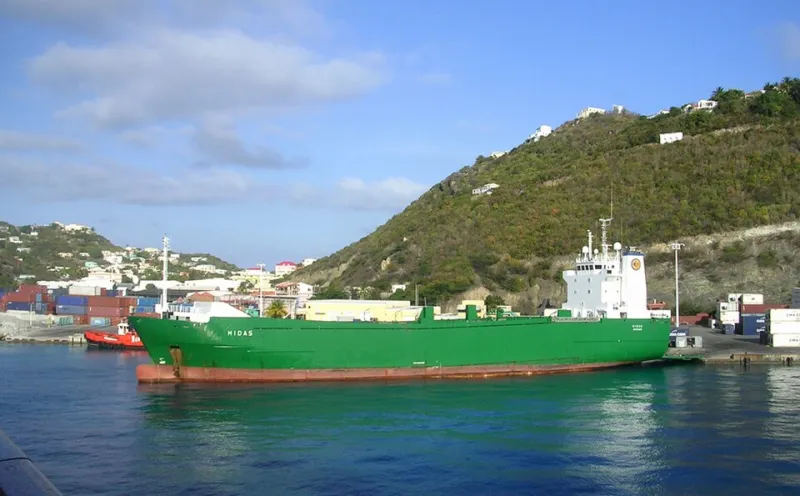
Photo: Roger W from Sarasota, Florida, U.S.A., CC BY-SA 2.0, via Wikimedia Commons
Ask an American e-commerce brand how its Korean goods reach the United States and the answer almost always includes Busan. It is the country's flagship port, it appears on every freight forwarder's rate sheet, and it is the default. Defaults, however, deserve scrutiny — and in the case of Korea's west coast, the scrutiny favors the smaller player.
Hongseong sits in the middle of that coastline, a region whose logistics infrastructure has grown steadily while attention stayed fixed on the southeast. The argument for routing through a hub like this one is not sentimental. It is arithmetic.
Congestion Is a Tax Nobody Quotes
Busan handles a volume of container traffic that places it among the busiest ports in the world. That scale is a genuine asset — until it isn't. Peak-season congestion, yard dwell times, and the scheduling cascades that follow a single disrupted vessel rotation all translate into variability. And variability, for an e-commerce operation running lean inventory, is the most expensive line item never printed on an invoice.
A regional port moves a fraction of that volume. Customs clearance windows are shorter. Terminal appointments are easier to secure. A container that misses a cutoff in Busan might wait days; the same miss at a smaller west-coast node is measured in hours. American sellers who have lived through a Q4 stockout know precisely what those hours are worth.
The Proximity Equation
Hongseong's location is its structural advantage. The Hongseong region hosts a dense cluster of manufacturers — components, processed goods, industrial inputs — and much of that production is closer to western ports than to Busan by a wide margin. Every kilometer of inland trucking is a cost and a delay, and both compound at origin.
For a US buyer comparing two Korean suppliers, the one shipping from a port forty minutes away can quote a tighter lead time at the same landed cost. The supplier shipping from four hours away cannot, no matter how efficient its factory floor.
What This Means for American Sellers
Three practical implications follow for US e-commerce brands sourcing from Korea:
- Landed-cost accuracy. Shorter inland legs mean fewer drayage variables, which makes quoted landed costs stick closer to actuals — critical for brands running fixed retail pricing.
- Replenishment agility. Faster origin processing shortens the reorder cycle. For a brand testing a product line, the difference between a six-week and an eight-week replenishment loop changes how much inventory it must gamble on.
- Diversification. Post-pandemic, every serious sourcing strategy includes a second routing option. A west-coast Korean corridor is that option for any brand currently funneled entirely through Busan.
The Honest Counterargument
Skepticism is warranted. Regional ports sail fewer direct services, meaning some cargo will still transit through a larger hub — the difference is that transshipment is arranged and predictable rather than reactive. And for ultra-high-volume shippers, Busan's sailing frequency remains unmatched. This argument is not that Hongseong should replace Busan for everyone. It is that the default deserves to be a decision rather than a habit.
Bridging the Information Gap
The obstacle, in practice, is informational. A US brand's freight forwarder quotes what it knows; it rarely volunteers that a regional Korean corridor exists, because the brand never asked. Korean SMEs, for their part, often under-market their logistics position — the factory knows its port is convenient but lacks the English-language materials to say so persuasively.
This is precisely the gap that consulting work at MPC Su Hongseong addresses: helping local firms document and communicate their logistics advantages to American buyers, and helping those buyers understand that "Korea" is not a single port but a geography with options. When both sides of the transaction see the full map, the smaller hub stops being a secret and starts being an edge.
The megaports will keep the big contracts. The regional corridors will quietly win the brands that measure time as carefully as they measure cost.