Funding the Leap: Five Korean Support Programs Hongseong SMEs Should Claim Before Selling to America
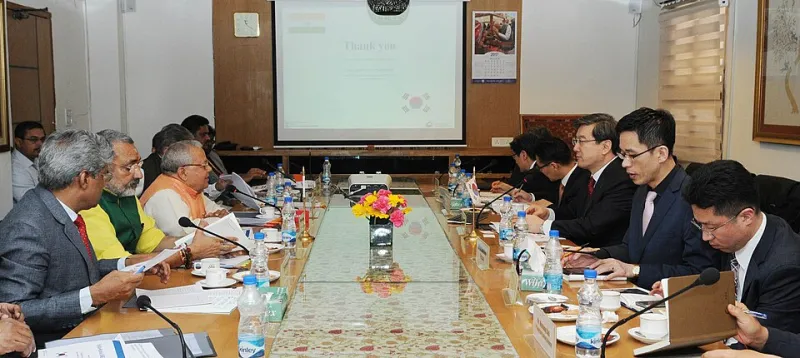
Photo: Ministry of Micro,Small & Medium Enterprises, Government of India, GODL-India, via Wikimedia Commons
American buyers rarely ask a Korean supplier whether it received a government grant. They ask about lead times, certifications, and whether the factory can scale. Yet the quiet truth of Korean export growth is that many of the SMEs meeting those demands were subsidized along the way — often by programs the founders didn't know existed.
For Hongseong businesses, the gap is rarely ambition. It is paperwork, timing, and the assumption that support programs are reserved for larger firms in Seoul or Incheon. They are not. Here are five that deserve attention before any US market-entry plan is finalized.
1. SMBA's Export Voucher Program (수출바우처)
The Small and Medium Business Administration's export voucher remains the most flexible entry point. It offsets the cost of hiring outside experts — translation, certification support, buyer matching, market research — rather than handing over unrestricted cash.
Timing: Applications typically open in waves through the first half of the year, though supplemental rounds appear in autumn.
Eligibility tip: Companies with fewer than three years of export history are prioritized. If your Hongseong firm has shipped only domestically, this works in your favor, not against you.
Practical note: Vouchers must be used with registered consulting providers. This is where MPC's role becomes concrete: businesses can apply the voucher directly toward structured US market-entry work rather than absorbing the full cost privately.
2. Chungcheongnam-do's SME Export Support Fund
The provincial government runs its own track for companies in the region, and Hongseong firms qualify. The fund generally supports participation in US trade shows, sample shipments, and localization of marketing materials.
Timing: Provincial calls for applications usually cluster in February–March, with a second window mid-year. Miss both and the next cycle is a year out.
Eligibility tip: Preference often goes to firms with a documented export roadmap. A one-page plan naming target states, buyer segments, and first-year revenue expectations materially strengthens an application.
3. KOTRA's Overseas Market Development Support
KOTRA's programs are less a grant than a subsidized pipeline. Participating SMEs gain access to KOTRA's US trade offices, curated buyer introductions, and market intelligence reports that would otherwise cost thousands of dollars through private research firms.
Timing: Rolling participation in many sub-programs, but flagship cohorts fill early in the fiscal year.
Eligibility tip: KOTRA favors companies whose products fit identified demand gaps — agricultural processing equipment, food ingredients, industrial components. Hongseong's manufacturing base maps onto several of these categories.
4. Local Government Manufacturing Innovation Support
Hongseong County itself administers smaller-scale support aimed at facility upgrades and productivity improvements — smart factory subsidies, equipment modernization, and certification cost-sharing (ISO, CE, and US-specific standards like FDA registration assistance).
Timing: Annual budget cycles mean applications are often accepted once per year, usually in the first quarter.
Eligibility tip: These programs reward specificity. An application that says "we need to improve capacity" loses to one that says "we need to add a second CNC line to fulfill a projected US distributor order."
5. Export Insurance and Guarantee Programs (K-sure and KODIT)
Not grants in the traditional sense, but frequently overlooked. The Korea Trade Insurance Corporation (K-sure) and Korea Credit Guarantee Fund reduce the financial risk of extending payment terms to American buyers — a practical necessity, since US B2B buyers commonly expect net-30 to net-60 terms that strain a small manufacturer's cash flow.
Timing: Available year-round, but underwriting takes weeks. Start before the first US contract is signed, not after.
Eligibility tip: First-time exporters often receive more favorable guarantee rates. Do not wait until the company has a track record of overseas receivables to apply.
Combining the Programs Without Drowning in Them
The trap for most SMEs is treating these five options as a checklist to be applied for individually, each with its own forms, deadlines, and reporting requirements. In practice, the programs are designed to layer: a provincial fund can cover trade show travel, an export voucher can fund the consulting that converts show leads into contracts, and K-sure can insure the resulting invoices.
MPC's consulting work in Hongseong centers on exactly this sequencing — identifying which programs a specific company qualifies for, aligning application timelines with its actual export calendar, and ensuring the subsidized work (market research, buyer outreach, certification) feeds directly into a coherent US entry strategy rather than a drawer of disconnected reports.
For a Hongseong manufacturer weighing whether the American market is worth the upfront cost, the honest answer is that a meaningful share of that cost has already been budgeted by someone else. The only remaining task is claiming it in the right order.