Test Before You Invest: Running a Low-Volume Pilot Order Out of Hongseong
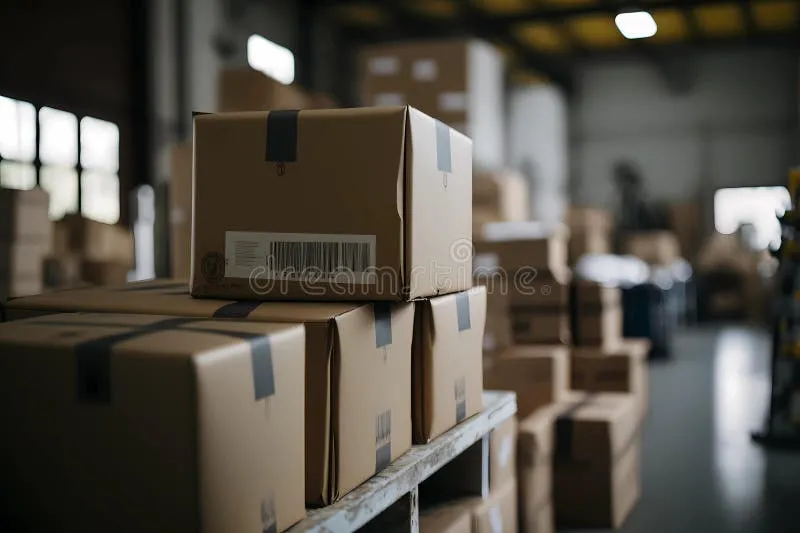
Photo: small batch product boxes packed in warehouse for e-commerce shipping, via thumbs.dreamstime.com
Every e-commerce entrepreneur knows the pattern: a product idea looks great on paper, the sample from the factory looks even better, and then 2,000 units arrive with a flaw nobody caught. For US sellers, the traditional remedy — a full container load to unlock a workable unit price — turns product validation into a leverage bet. Hongseong offers a different path: structured, low-volume pilot runs designed to answer your biggest questions before your biggest dollars are committed.
Why a Pilot Run Beats a Big First Order
A pilot run is not a small version of a large order. It's a separate instrument with a separate purpose. Its goal is to surface the three things no sample can reveal: whether production quality holds across a batch, whether the landed cost model survives contact with reality, and whether American customers actually buy the thing.
Ordering 150 to 300 units instead of 3,000 changes your risk math entirely. Your cash exposure drops by an order of magnitude, and — critically for a West Coast Korean port like Hongseong — the short transit and fast clearance mean the feedback loop between spotting a defect and fixing it shrinks from months to weeks.
Structuring the Pilot: A Five-Step Framework
Step 1: Define the pass/fail questions before you order. Write down exactly what the pilot must tell you. Examples: defect rate below 2%? Landed cost per unit under $9? Sell-through of 40% in 30 days? If a metric isn't on this list, it doesn't belong in the pilot.
Step 2: Pick a supplier suited to low volumes. This is where Hongseong's firm structure matters. Many local manufacturers will accept pilot quantities of 100–500 units because the shops are small and setup flexibility is high. MPC Su Hongseong maintains relationships across these firms and can match a buyer's category and volume to factories that won't dismiss the inquiry.
Step 3: Negotiate the pilot as its own contract. Be explicit that this is a validation run with a defined success path to larger orders. Suppliers respond well to a roadmap: pilot of 200 units now, 1,000 in Q3 if metrics are met. This framing often unlocks better unit pricing and priority scheduling.
Step 4: Offset setup costs with local support programs. Korean SME support initiatives — many administered through regional bodies like MPC — can subsidize tooling adjustments, sampling, packaging design, and export documentation for first-time partnerships. For a US buyer, that means the supplier's setup cost, often folded into your unit price, may be partially covered. Ask early; these programs have application windows.
Step 5: Build inspection into the timeline. Budget two to three days for pre-shipment inspection. With port turnaround measured in days rather than weeks, a defect caught before loading costs you a short delay; caught after arrival, it costs you a season.
A Copyable Cost-and-Timeline Worksheet
Here is a realistic planning framework for a pilot of 250 units:
| Phase | Duration | Estimated Cost (USD) |
|---|---|---|
| Supplier matching & spec finalization | Weeks 1–2 | $0–500 (consulting, translation) |
| Sampling & revision | Weeks 3–5 | $300–800 |
| Pilot production | Weeks 6–8 | Varies by category; expect 15–30% above full-container unit pricing |
| Inspection & documentation | Week 9 | $150–400 |
| Ocean freight + clearance (Hongseong to US West Coast) | Weeks 10–12 | $800–1,500 |
| Total cash at risk | ~12 weeks | Typically $2,500–6,000 before unit costs |
Compare that with the $25,000–60,000 tied up in a first container order, and the logic becomes obvious. You are buying information at a discount.
Iterate in Weeks, Not Quarters
The real payoff of the Hongseong pilot model is iteration speed. Customer feedback from batch one can be back at the factory — through MPC's advisors — while the production line is still warm. A packaging fix, a material swap, a dimension tweak: each cycle runs four to six weeks end to end. In a conventional sourcing arrangement, the same loop takes a quarter or more.
For a US seller, that means you can reach your third product version before a competitor reaches their first restock. Validate small, fail cheap, scale fast — and let Hongseong's compact supply chain do what it does best.