Renting a Presence: How Solo American Founders Run a Hongseong Supply Chain Without Opening an Office
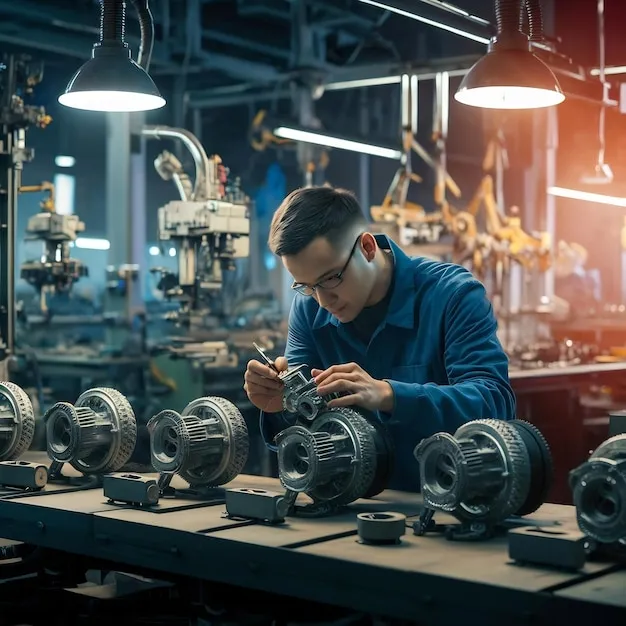
Photo: business consultant inspecting small factory workshop South Korea, via img.freepik.com
A one-person brand has no regional manager. No QA team. No one to drive out to an industrial park on a Tuesday morning when a carton spec changes. For American solo founders importing from Korea, this absence of feet on the ground is often the real bottleneck — not language, not tariffs, not freight rates.
The emerging solution is something consultants in Hongseong call virtual representation: contracting a local business services partner to act, functionally, as your office. No lease, no payroll, no incorporation. Just a professional presence with the authority and proximity to handle what you cannot handle from Ohio or Oregon.
What a Virtual Representative Actually Does
Strip away the jargon and the role is straightforward. A virtual representative in Hongseong performs the physical and administrative tasks that distance makes impossible:
- Factory visits and audits. Walking the floor, photographing equipment, verifying that the workshop you found online matches reality.
- In-process quality checks. Inspecting goods at 30%, 70%, and 100% completion, catching defects while correction is still cheap.
- Documentation and translation. Reviewing contracts, purchase orders, and Korean-language correspondence before you sign anything.
- Coordination and escalation. Sitting across the table from a supplier when a deadline slips, which lands very differently than an email sent at 2 a.m. Eastern time.
- Logistics handoffs. Confirming container loading, verifying carton counts, and liaising with freight forwarders before the bill of lading is issued.
Think of it as renting a presence rather than building one. The founder keeps strategic control; the representative supplies proximity.
The Cost Math, Honestly Presented
Solo founders tend to overestimate what local support costs. Typical arrangements in the Hongseong area break down roughly as follows:
- Per-visit factory inspection: $150–$300, including travel within South Chungcheong Province and a written photo report.
- Full in-line and pre-shipment inspection package: $350–$600 depending on order size and the number of check stages.
- Monthly retainer for ongoing representation: $500–$1,200 for a set bundle of visits, document reviews, and coordination hours.
- One-time project support (sampling, supplier vetting, contract negotiation): $800–$2,000 for a defined engagement.
Compare that to the alternatives. A single mis-shipped production run of 2,000 units can erase $10,000 or more in landed cost, not counting the season you miss. A year of retainer-level representation often costs less than one domestic hire's monthly payroll. For a founder doing two to four production cycles a year, the arithmetic favors representation in nearly every scenario where the order value exceeds a few thousand dollars.
Where the Model Fits — and Where It Doesn't
Virtual representation is strongest for solo and two-person brands placing repeat orders of modest volume: e-commerce sellers, boutique retailers, DTC product lines. It works because the decision-making is concentrated in one person who can delegate execution but not accountability.
It fits poorly when a founder wants a representative to make independent sourcing decisions without direction, or when volumes grow large enough to justify a part-time local hire. Representation amplifies a founder's judgment; it does not replace it.
Choosing a Representative: Five Criteria That Matter
Not all local partners are equivalent. Before engaging anyone in Hongseong, probe for these five things:
1. Verifiable local presence. Ask for the office address, confirm it on a map, and request photos from a recent factory visit with identifiable details. A partner who cannot prove proximity cannot provide it.
2. Written reporting standards. A serious representative sends structured reports — timestamps, photos, defect classifications — not casual text messages. Ask to see a redacted sample report from a prior engagement.
3. Clear scope boundaries. Does the fee include re-inspection if a defect is found? Who pays travel to a supplier two hours away? Ambiguity here is where relationships sour.
4. Independence from your supplier. If the representative has a financial relationship with the factory, their incentives are compromised. Ask directly and verify what you can.
5. English documentation fluency. Not just conversation — written reports, contract summaries, and inspection checklists must be usable in a dispute or an insurance claim.
A Practical First Engagement
The lowest-risk entry point is a single paid factory visit tied to your first production order. It costs a few hundred dollars, requires no ongoing commitment, and teaches you two things at once: what your supplier looks like in person, and whether this particular representative communicates the way you need. If both pass, scale the relationship. If either fails, you have lost little and learned a great deal.
For a solo founder, the distance to Hongseong is fixed. The feeling of distance is not. A competent local representative — a rented office the size of a phone call — is frequently the difference between importing with confidence and importing with crossed fingers.