What the West Coast of Korea Can Teach American Importers About Supply Chain Resilience
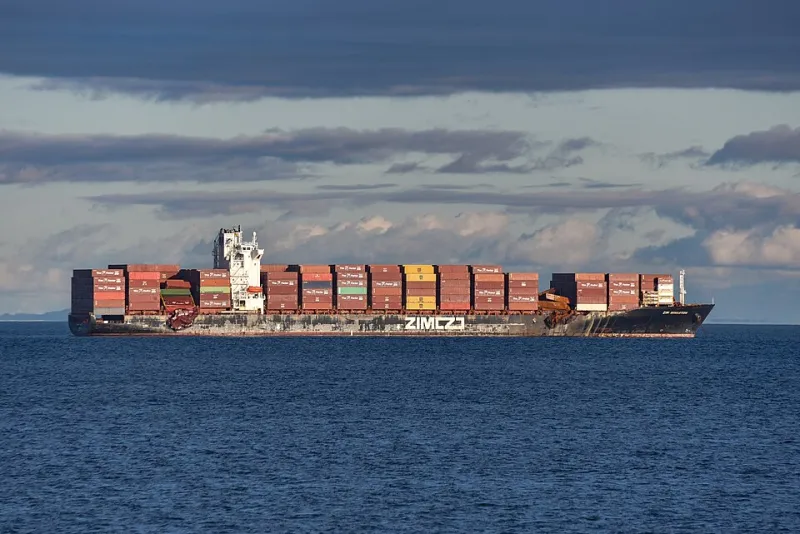
Photo: Gordon Leggett, CC BY 4.0, via Wikimedia Commons
When American supply chain managers map their sourcing networks, the Korean Peninsula often appears as a single point — Seoul, or perhaps Busan. But Korea's logistics geography is more nuanced than that, and the country's west coast has developed into a corridor with lessons that translate directly to how US importers build resilient supplier relationships. Hongseong, positioned in the middle of that corridor, offers a working case study.
Lesson 1: Proximity to Ports Is a Strategy, Not an Accident
Korea's western seaboard faces China across the Yellow Sea and connects inward through an expanding network of industrial parks, inland cargo depots, and expressways. Ports such as Pyeongtaek-Dangjin and Incheon anchor the corridor, giving manufacturers in South Chungcheong Province — including Hongseong — unusually short drayage distances to deep-water terminals.
The takeaway for US importers: when evaluating overseas suppliers, ask about the distance from factory floor to vessel, not just port to port. A supplier four hours from a terminal with dependable sailing schedules will outperform one nominally closer to a congested mega-port. Freight reliability is decided on the truck route before the ship ever loads.
Lesson 2: Regional Support Infrastructure Compounds Over Time
Hongseong's SME ecosystem did not emerge by chance. Provincial and municipal programs, paired with organizations like MPC, have invested for years in shared consulting resources, export documentation support, and logistics coordination for small manufacturers. The result is a region where a 30-person factory can access the same professional trade capabilities as a chaebol subsidiary.
US importers should recognize what this means for them: suppliers embedded in strong regional support networks are easier to onboard, faster to resolve problems with, and more likely to maintain compliance documentation. When vetting a Korean partner, asking whether they work with a regional business support organization is a legitimate due-diligence question — and a revealing one.
Lesson 3: Redundancy Is Built Through Corridors, Not Single Nodes
defensive supply chains concentrate on one port or one highway. Resilient ones build corridors. Korea's west coast illustrates the principle: manufacturers there can route freight through multiple terminals, shift between ocean and air via Incheon's cargo complex, and adjust to seasonal congestion without reengineering their entire operation.
American importers can apply the same thinking to their Korean sourcing. Rather than treating a supplier as a fixed point, treat the supplier's logistics options as part of the value. A Hongseong manufacturer with corridor flexibility can absorb a port strike, a typhoon delay, or a peak-season crunch in ways a single-node supplier cannot.
Lesson 4: Small Suppliers, Professionally Managed, Reduce Concentration Risk
The instinct of many US procurement teams is to consolidate volume with a few large suppliers for simplicity. Korea's west coast model suggests an alternative: a portfolio of small and mid-sized manufacturers, each professionally supported by regional infrastructure, can deliver comparable reliability with less concentration risk. If one supplier stumbles, others in the network can flex.
This approach demands more coordination — which is where intermediaries with local presence earn their keep. MPC acts as that coordinating layer, giving US buyers a single point of contact across multiple Hongseong manufacturers while preserving the diversification benefits of a broader supplier base.
Lesson 5: Communication Cadence Is a Competitive Asset
Perhaps the least glamorous lesson is the most important. The west coast corridor's efficiency rests on dense, habitual communication between manufacturers, freight forwarders, and support organizations — daily, unglamorous information exchange that surfaces problems while they are still small.
US importers should build this cadence into their Korean relationships deliberately: weekly status updates during production, milestone confirmations at booking and loading, and shared visibility into documentation. Suppliers accustomed to regional coordination cultures adapt to this rhythm quickly, and the payoff is fewer surprises on this side of the Pacific.
The Bridge Between Two Coasts
The distance between a distribution center in Ohio and a workshop in Hongseong is measured in more than miles. It is measured in handoffs — and every handoff is an opportunity for either friction or fluency. Korea's west coast has spent two decades building the fluency side of that equation: ports, support infrastructure, diversified corridors, and a culture of professional coordination among small manufacturers.
For US importers, the opportunity is to plug into that system through partners who operate inside it daily. MPC Su Hongseong serves as the bridge between the two coasts — helping American buyers find, evaluate, and manage Hongseong-based suppliers with the same confidence they would apply to a domestic vendor. The lesson of the west coast, ultimately, is that resilience is not purchased. It is built, relationship by relationship, corridor by corridor.